
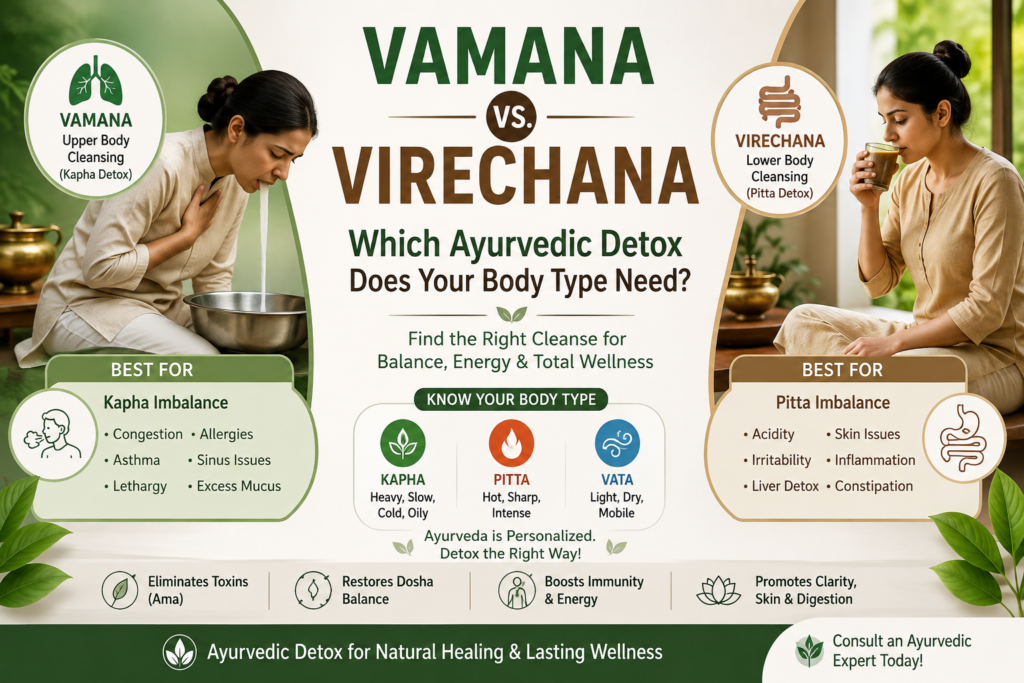
Unsure about Vamana vs Virechana? Discover how these two core Panchakarma therapies target Kapha and Pitta toxins and learn which detox your body type need.
When exploring authentic Panchakarma, you will quickly encounter two of its most powerful therapies: Vamana (therapeutic emesis) and Virechana (medicated purgation). While both procedures aim to elliminate accumulated metabolic toxins (Ama), they target completely different body systems and primary energies (Doshas).
Choosing between Vamana and Virechana is not a matter of personal preference; instead, it depends entirely on your unique body constitution (Prakriti) and current health imbalances (Vikriti).
If you are wondering which of these deep-cleansing therapies your body requires, here is a detailed, side-by-side comparison.
Vamana vs. Virechana: At a Glance
| Feature | Vamana Therapy | Virechana Therapy |
| Primary Dosha Targeted | Kapha (Water & Earth) | Pitta (Fire & Water) |
| Primary Anatomical Target | Upper GI tract, stomach, lungs | Lower GI tract, liver, gallbladder, small intestine |
| Primary Method | Medicated therapeutic emesis | Medicated purgation (herbal laxative) |
| Key Symptoms Solved | Asthma, sinusitis, chronic cough, lethargy | Acid reflux, skin issues, liver congestion, heat |
Understanding Vamana Therapy (Kapha Cleansing)
Vamana is a controlled, physician-guided procedure designed to eliminate excess Kapha Dosha from the upper digestive tract and respiratory system.
When Kapha becomes unbalanced, it manifests as excess mucus, heaviness, slow meatabolism, and fluid retention. Because the primary seat of Kapha is the stomach and upper chest, Vamana cleanses these zones directly.
Signs You Might Need Vamana:
- Respiratory Congestion: Chronic sinusitis, bronchitis, asthma, or persistent allergies.
- Metabolic Sluggishness: Unexplained weight gain, high cholestrol, or feeling heavy and lazy.
- Skin & Mucus Disorders: Excess mucus production, greasy skin, or stubborn psoriasis.
How Vamana Works:
First, the body is prepared over several days through internal oleation (drinking medicated ghee) and herbal steam sessions. Once toxins are mobilized into the stomach, the patient drinks a specially formulated herbal decoction (often containing Madanaphala) under strict medical supervision. Consequently, the stomach expels the accumulated Kapha toxins smoothly and completely.
Understanding Virechana Therapy (Pitta Cleansing)
Virechana, on the other hand, is a gentle, highly effective procedure designed t eliminate excess Pitta dosha from the mid-digestive tract.
Pitta governs heat, metabolism,, digestion, and blood tissue (Rakta Dhatu). When Pitta accumulates, it creates internal heat, inflammation, hyperacidity and skin eruptions. Since the primary seat of Pitta is the small intestine and liver, Virechana routes these toxins downward for elimination.
Signs You Might Need Virechana:
- Digestive Heat: Hyperacidity, chronic heartburn, GERD, or IBS with heat symptoms.
- Inflammatory Skin Conditions: Acne, eczema, hives, or skin redness.
- Liver & Blood Congestion: Fatty liver, high uric acid, chronic headaches, or excessive sweating.
How Virechana Works:
Similar to Vamana, the patient undergoes a preparation phase with medicated oils and steam baths. However, instead of emetic herbs, the physician administers a custom herbal purgative (such as Trivrit or herbal castor oil) in the morning. As a result, the body naturally flushes out toxins through controlled bowel movements over a few hours, leaving the liver and intestines thoroughly cleansed.
Which One Do You Need?
Determine whether Vamana or Virechana is right for you comes down to identifying which Dosha is causing your symptoms:
- If the issue reside above the diaphragm- such as chronic sinus congestion, heavy coughs, or sluggish mental fog- Vamana is typically the primary therapy required.
- If your issues reside between the diaphragm and navel- such as acid reflux, liver inflammation, or hot skin breakouts- Virechana is usually the treatment of choice.
Furthermore, many patients undergoing a full multi-week Panchakarma program may receive both therapies in sequence to achieve complete physical balance.
Why Professional Medical Supervision is Crucial
Neither Vamana nor Virechana should ever be attempted at home or without a qualified Ayurvedic doctor (Vaidya). Because these therapies induce real physiological shifts, precise herbal dosages, pulse assessments, and post-treatment dietary care (Samsarjana Krama) are mandatory to ensure complete safety and optimal healing.
Frequently Asked Questions (FAQs)
Is Vamana painful or violent like violent vomiting?
No. Because the body is thoroughly prepared beforehead with ghee and steam, the toxins are already loosened. Therefore, the procedure is smooth, controlled, and relieved of the harsh nausea associated with sickness.
How will I feel after a Virechana therapy session?
Patients usually feel significantly lighter, cooler, and clearer. However, because the digestive system has worked hard, you will follow a warm, gentle diet (like rice gruel) for a few days to rebuild your digestive strength (Agni).
Discover Your Unique Detox Blueprint
Stop guessing what your body needs. Allow our experienced Ayurvedic physicians to evaluate your constitutional balance and guide you toward the exact Panchkarma protocol designed for your health goals.
[Book Your Ayurvedic Assessment with Fettle Ayurveda today]