
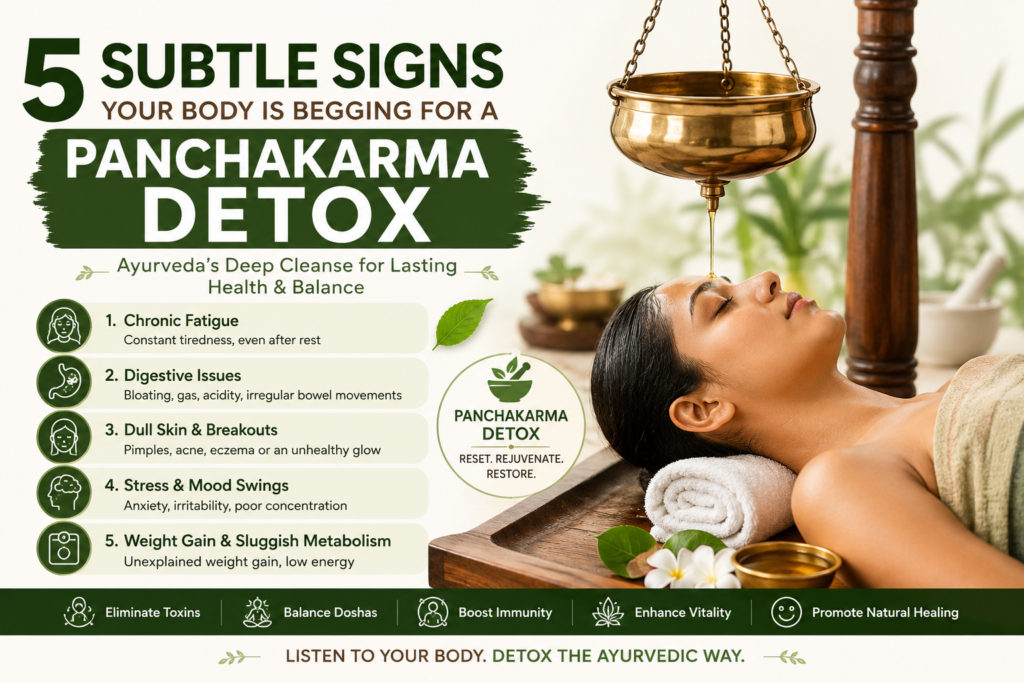
Constantly tired, bloated, or experiencing brain fog? Discover the 5 warning signs of toxic buildup (Ama) according to Ayurveda, and how a Panchakarma detox restores your balance.
Have you ever woken up feeling exhausted despite getting eight full hours of sleep? Or noticed that your skin looks dull and your digestion feels perpetually sluggish—even when you eat healthy?
In our fast-paced world, it is easy to brush off these subtle signals as normal daily stress. However, in Ayurvedic medicine, these everyday complaints are considered early warning signs that your body’s natural elimination systems are overloaded.
When your digestive fire (Agni) weakens, metabolic waste and undigested toxins—known as Ama—begin to accumulate in your tissues. When Ama builds up faster than your body can flush it out, a deep, restorative reset is needed.
Here are 5 clear signs that your body is holding onto toxins and ready for a therapeutic Panchakarma detox.
Quick Checklist: Is Your Body Asking for a Detox?
- Persistent morning fatigue and heavy limbs
- Chronic bloating, gas, or a thick white coating on your tongue
- Persistent brain fog and difficulty concentrating
- Frequent skin breakouts, dullness, or unexplained rashes
- Joint stiffness or bodily aches upon waking
1. You Suffer from Chronic Digestive Issues & Bloating
Your digestive tract is the foundation of your health. When toxins accumulate in the gut, your digestion becomes unpredictable.
What it looks like:
- Persistent gas, bloating, or hyperacidity after meals
- Irregular bowel movements (constipation or loose stools)
- A thick, white or yellowish coating on your tongue when you wake up (a classic Ayurvedic indicator of Ama)
How Panchakarma Helps: Therapies like Virechana (medicated purgation) and Basti (herbal enemas) gently cleanse the intestinal lining, remove trapped waste, and revive your digestive fire (Agni).
2. Unexplained Fatigue and “Heavy” Limbs
If you rely on multiple cups of coffee just to drag yourself through the day, the issue might not be lack of sleep—it may be cellular overload.
What it looks like:
- Waking up feeling unrefreshed, regardless of sleep hours
- A physical sensation of heaviness in your legs, arms, or abdomen
- Low physical energy even after light exertion
How Panchakarma Helps: Through preparation therapies like Snehana (internal and external oleation) and warm Abhyanga (herbal oil massage), toxins are loosened from deep tissues, freeing up your body’s vital life energy (Prana).
3. Persistent Brain Fog and Lack of Focus
Toxins do not just affect your physical body; they cross into your nervous system. In Ayurveda, the mind and gut are deeply connected through the channel systems (Srotas).
What it looks like:
- Difficulty concentrating or making decisions
- Short-term memory gaps
- Feeling mentally “cloudy,” anxious, or unmotivated
How Panchakarma Helps: Treatments like Shirodhara (continuous warm oil poured over the third eye) and Nasya (nasal administration of medicated oils) calm the central nervous system, clear cranial channels, and restore sharp mental clarity.
4. Stubborn Skin Issues and Breakouts
Your skin is your largest organ of elimination. When your liver and kidneys are overworked trying to filter out internal toxins, the body attempts to expel waste through the skin.
What it looks like:
- Unexplained acne, rashes, or eczema flare-ups
- Excessive skin dryness or unusual oiliness
- Dull, lifeless complexion with dark under-eye circles
How Panchakarma Helps: Specialized treatments clean the blood (Rakta Dhatu) and balance excess Pitta heat, addressing the root internal cause of skin disorders rather than just treating symptoms on the surface.
5. Morning Joint Stiffness and Aches
When Ama circulates through the bloodstream, it frequently settles in the joints, leading to localized inflammation, stiffness, and discomfort.
What it looks like:
- Waking up with stiff fingers, knees, or lower back
- General aching in muscles without intense exercise
- Creaky joints accompanied by feeling cold or sluggish
How Panchakarma Helps: Herbal sudation (Swedana) and targeted joint therapies like Janu Basti warm the tissues, liquefy trapped toxins, lubricate joints, and improve circulation.
Panchakarma vs. Home Cleanses: Why Depth Matters
Juice cleanses and fad diets only touch the surface level of the digestive tract—and can sometimes weaken your internal digestion (Agni) further.
Panchakarma is an authentic, physician-supervised medical process. It works in three distinct phases:
- Loosening deep-seated toxins using medicated ghee and herbal oils.
- Channeling those toxins into the digestive tract using herbal steam.
- Eliminating them completely through custom therapeutic procedures.
Frequently Asked Questions (FAQs)
Que: How do I know if I need a full Panchakarma or just a light detox?
Ans: An initial consultation with an Ayurvedic physician uses pulse diagnosis (Nadi Pariksha) and symptom analysis to evaluate your toxin load (Ama) and determine whether a full 7 to 21-day program or a lighter regimen is best for you.
Que: Is Panchakarma uncomfortable if I have high toxin levels?
Ans: Because Panchakarma includes a preparation phase (Poorva Karma), your body is carefully prepared before any elimination takes place. This prevents the harsh “detox crashes” often caused by extreme diets.
Listen to Your Body’s Signals
Ignoring these warning signs can lead to chronic inflammation and metabolic imbalances over time. If you recognize two or more of these symptoms in your daily life, your body is telling you it is time for a reset.
Ready to clear toxins and reclaim your energy?
[Book a Personalized Ayurvedic Assessment at Fettle Ayurveda Today]